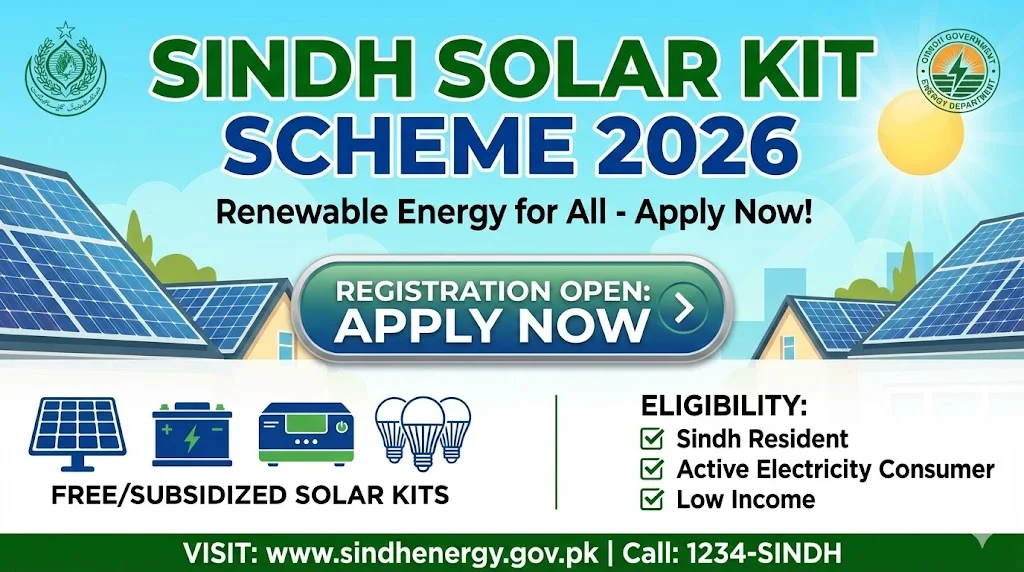
Sindh Solar Kit Scheme 2026 – Complete Guide for Low-Income Families
The Sindh Solar Kit Scheme 2026 is a major renewable energy initiative launched by the Government of Sindh with financial support from the World Bank. Under this program, 200,000 subsidized Solar Home Systems (SHS) are being distributed to low-income, off-grid households across the province.
This project operates under the Sindh Solar Energy Project (SSEP) and primarily targets families already registered under the Benazir Income Support Programme (BISP).
The scheme began its rollout before July 2025 and continues expanding into 2026, aiming to provide clean, affordable, and reliable electricity to deserving households.
What Is the Sindh Solar Kit Scheme 2026?
The Sindh Solar Kit Scheme is a subsidized solar home system distribution program designed for families who do not have access to electricity or rely on expensive alternatives like generators and kerosene.
Under this scheme:
- 200,000 households will receive Solar Home Systems
- The government covers 80% of the total cost
- Beneficiaries pay only PKR 6,000
- Kits are delivered directly to selected households
The project focuses on improving living standards in rural and remote areas of Sindh.
Key Objectives of the Scheme
The Sindh government aims to:
- Provide clean and renewable electricity
- Reduce dependence on costly fossil fuels
- Improve education opportunities through better lighting
- Support women and children in rural households
- Promote environmental sustainability
This initiative is part of a larger $105 million energy access program supported by international partners.
Who Is Eligible for the Sindh Solar Kit Scheme?
Eligibility is based on strict selection criteria to ensure that only deserving families benefit.
Target Beneficiaries
- Families registered in the BISP database
- Households with a Poverty Scorecard (PMT) between 21 and 50
- Low-income, off-grid rural households
- Residents of selected districts in Sindh
Selection is made through verified government databases to maintain transparency.
If you are not registered under BISP, you may need to complete your registration first.
What Is Included in the Solar Kit?
Each Solar Home System (SHS) includes essential components designed for basic household energy needs.
System Components
- Solar panel
- Long-lasting rechargeable battery
- 3 energy-efficient LED bulbs
- 1 DC fan
- Mobile charging port
These components allow families to:
- Light their homes at night
- Run a fan during hot weather
- Charge mobile phones
- Reduce electricity expenses
The system is designed to be durable and low maintenance.
Cost and Subsidy Details
The Sindh government heavily subsidizes the scheme to make it affordable.
| Item | Details |
|---|---|
| Total System Cost | Mostly covered by government |
| Government Subsidy | 80% |
| Beneficiary Contribution | PKR 6,000 only |
| Payment Method | As per official instructions |
The nominal fee ensures community ownership while keeping the system affordable for low-income households.
Distribution Process
The distribution process is structured and transparent.
How Kits Are Delivered
- Beneficiaries are selected from verified BISP data
- Selected households are contacted officially
- Kits are delivered directly to beneficiaries’ homes
- Installation support may be provided
Distribution is handled by reputable NGOs, including:
- HANDS
- Sindh Rural Support Organization
- SAFCO Support Foundation
These organizations help ensure smooth delivery and proper installation in rural communities.
Coverage Across Sindh
The scheme covers approximately 30 districts across Sindh, focusing primarily on rural and underserved areas where grid electricity is unavailable or unreliable.
District selection is based on:
- Poverty levels
- Lack of electricity infrastructure
- BISP beneficiary concentration
The goal is to ensure equitable access across the province.
Benefits of the Sindh Solar Kit Scheme
The program offers multiple long-term advantages.
1. Affordable Energy
Families no longer depend on expensive fuel or unreliable generators.
2. Better Education
Children can study at night with proper lighting.
3. Improved Health
Reduced use of kerosene lamps lowers indoor air pollution.
4. Women Empowerment
Reliable electricity improves household productivity.
5. Environmental Protection
Solar energy reduces carbon emissions and supports clean energy goals.
How This Project Supports Rural Development
The Sindh Solar Energy Project aligns with broader energy and poverty reduction policies. By bringing electricity to off-grid homes:
- Rural economic activity improves
- Digital access becomes easier
- Living standards increase
- Communities become more self-reliant
This initiative is a strong step toward sustainable development in Sindh.
Common Questions About Sindh Solar Kit Scheme 2026
Is registration open for everyone?
No. Selection is based on BISP database eligibility and poverty score.
Can urban households apply?
Priority is given to rural, off-grid households.
Is the PKR 6,000 refundable?
No. It is a beneficiary contribution toward the subsidized system.
Will installation support be provided?
Yes, partner NGOs assist with delivery and basic installation guidance.
Is this scheme available in all districts?
It covers around 30 districts in Sindh, focusing on underserved areas.
Important Instructions for Beneficiaries
- Do not pay extra money to agents
- Only trust official communication
- Verify your BISP registration status
- Keep your CNIC updated
- Follow instructions from authorized NGOs
Fraud attempts can occur during large subsidy programs, so remain cautious.
Conclusion
The Sindh Solar Kit Scheme 2026 is a transformative initiative aimed at providing affordable and clean electricity to 200,000 low-income households. With 80% government subsidy and only PKR 6,000 beneficiary contribution, the program makes solar power accessible to families who need it most.
Supported by the World Bank and implemented through the Sindh Solar Energy Project, this initiative strengthens rural development, promotes renewable energy, and improves quality of life across Sindh.
Eligible families should stay connected with official BISP updates and local authorities to benefit from this life-changing opportunity.