BISP Sindh Solar Kit Scheme 2026 – BISP Solar Scheme Sindh Online Registration Complete Guide
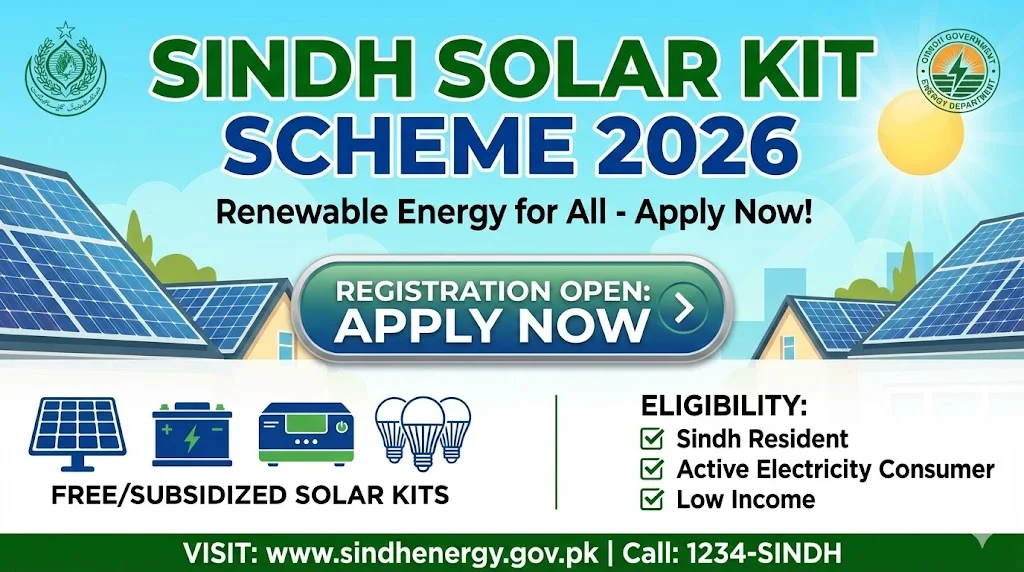
The BISP Sindh Solar Kit Scheme 2026 is a major relief initiative launched by the Government of Sindh in collaboration with the World Bank and HANDS Pakistan. Under this program, 200,000 subsidized Solar Home Systems (SHS) are being distributed to low-income families identified through the Benazir Income Support Programme (BISP) database.
This initiative is part of the larger Sindh Solar Energy Project (SSEP) and aims to reduce energy poverty, lower electricity expenses, and promote renewable energy across Sindh.
If you are searching for:
- BISP Solar Scheme Sindh online registration
- Sindh Solar Kit Scheme 2026 apply online
- BISP solar system registration
- Sindh solar scheme Rs 6000 details
- Sindh Energy Department solar scheme
This detailed SEO guide explains everything you need to know.
What is the BISP Sindh Solar Kit Scheme 2026?
The BISP Solar Scheme Sindh is designed specifically for low-income households registered under BISP and families affected by floods or living in energy-deprived rural areas.
Unlike completely free solar schemes, this initiative provides an 80% subsidy, meaning beneficiaries contribute a small portion (around Rs 6,000) to receive full ownership of the system.
The project currently covers 30 districts of Sindh, including Karachi, ensuring both urban low-income settlements and rural villages benefit from solar energy access.
Key Features of the Sindh Solar Scheme (SSEP)
Here are the major highlights of the program:
Target Beneficiaries
- Families listed in the BISP database
- Flood-affected households
- Low-income rural and urban families
- Off-grid communities
Number of Solar Systems
- 200,000 Solar Home Systems in the first phase
Coverage Area
- 30 districts across Sindh
- Includes Karachi and rural districts
Implementing Authorities
- Sindh Energy Department
- HANDS Pakistan
What Is Included in the Solar Kit?
Each Solar Home System (SHS) includes:
- 80–100W Solar PV panel
- 18 AH Lithium-ion battery
- 1 DC fan
- 3 LED bulbs
- Mobile charging port
- Complete wiring and installation support
The system is suitable for basic household needs like lighting, fan operation, and mobile charging.
Subsidy & Cost Details – How Much Do Beneficiaries Pay?
One of the most important aspects of this scheme is the subsidy structure.
- Total system value: Higher than Rs 25,000 (approximate market value)
- Government subsidy: 80%
- Beneficiary contribution: Around Rs 6,000
This contribution ensures ownership while keeping the system affordable for low-income families.
The subsidized ownership model also reduces misuse and encourages responsible maintenance of the system.
BISP Solar Scheme Sindh Online Registration – How to Apply?
Currently, the selection process is primarily based on BISP data verification. However, interested applicants can follow these steps:
Step 1: Eligibility Check
If you are already registered under BISP, your data may already be in the system.
Step 2: Contact Local Offices
Visit:
- Local HANDS Pakistan office
- Sindh Energy Department representatives
Step 3: CNIC Verification
Provide your CNIC for eligibility confirmation.
Step 4: Approval & Payment
If selected, you will be informed about:
- Approval status
- Rs 6,000 contribution process
- Installation schedule
There is no unofficial online agent registration. Always rely on official channels only.
Is Karachi Included in the Scheme?
Yes, Karachi is included among the 30 districts covered in the scheme.
Low-income families in Karachi who are part of BISP or fall under eligible categories can benefit from the subsidized solar system.
Future Expansion – 500,000 Additional Solar Systems
Due to high demand and positive feedback, the Sindh government is planning to expand the initiative.
Future plans include:
- Distribution of an additional 500,000 solar systems
- Wider coverage of rural Sindh
- Increased renewable energy adoption
- Expansion beyond BISP families
This indicates that the program may become one of Pakistan’s largest provincial solar energy projects.
Why This Scheme Is Important for Sindh
1. Relief from High Electricity Bills
Rising electricity tariffs have made it difficult for low-income families to manage expenses. Solar systems reduce dependence on grid electricity.
2. Support for Flood-Affected Families
Many families who lost homes or infrastructure during the 2022 floods are being prioritized.
3. Environmental Benefits
Solar energy reduces carbon emissions and supports clean energy goals.
4. Energy Access in Rural Areas
Many villages still face load shedding or lack grid connectivity. Solar kits provide reliable electricity.
Sindh Solar Energy Project (SSEP) – Transparency & Monitoring
The Sindh Solar Energy Project operates under strict monitoring mechanisms supported by the World Bank.
Key transparency features include:
- Database verification
- Digital tracking of beneficiaries
- Cross-checking with BISP records
- Controlled district-wise distribution
This minimizes fraud and ensures that genuine beneficiaries receive the systems.
Important Advice for Applicants
- Do not trust middlemen or agents demanding extra money
- The official contribution is approximately Rs 6,000 only
- Always verify through official HANDS Pakistan or Sindh Energy Department offices
- Keep your CNIC and BISP registration updated
- Monitor official announcements for expansion phases
Frequently Asked Questions (FAQs)
Is the BISP Solar Kit completely free?
No. It is provided with an 80% subsidy. Beneficiaries pay around Rs 6,000.
Who is eligible?
Low-income families listed in BISP and flood-affected households.
How many districts are covered?
The scheme covers 30 districts of Sindh, including Karachi.
What appliances can run on this solar system?
It supports LED bulbs, one DC fan, and mobile charging.
Will there be more solar systems distributed?
Yes, the government plans to expand the scheme with an additional 500,000 systems in future phases.
Final Words
The BISP Sindh Solar Kit Scheme 2026 is a transformative initiative that combines social welfare with renewable energy development. By offering 200,000 subsidized Solar Home Systems at an 80% subsidy, the Sindh government is helping low-income families gain access to clean, affordable electricity.
With future expansion plans already under discussion, eligible families are encouraged to verify their status through official channels as soon as possible.
This scheme not only reduces electricity costs but also strengthens Sindh’s journey toward a sustainable and energy-secure future.