Empowering the Fields: Sindh Government Releases 12 Billion PKR for Farmer Subsidies in Phase 2
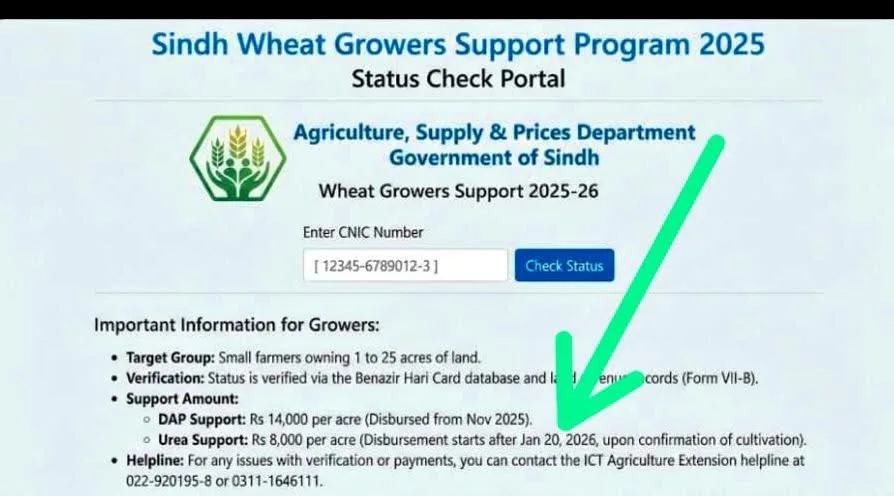
The agricultural landscape of Sindh is witnessing a historic financial injection aimed at stabilizing the rural economy and bolstering food security. In a major development for the province’s agrarian sector, the Sindh Agriculture Department has officially released over 12 billion PKR to Sindh Bank for the second phase of its ambitious farmer support program.
Provincial Minister for Agriculture, Mohammad Bakhsh Mehr, announced this landmark move, emphasizing the government’s commitment to standing by the “Haris” (farmers) during these challenging economic times. This initiative is expected to provide much-needed relief to thousands of families whose livelihoods depend on the fertility of the Indus plains.
A Massive Financial Boost: 12 Billion PKR for Phase 2
The release of over 12 billion PKR marks a significant milestone in the provincial government’s roadmap for rural development. This capital is specifically earmarked for the second phase of a subsidy program designed to offset the rising costs of agricultural inputs.
Agriculture is the backbone of Sindh’s economy, contributing significantly to Pakistan’s overall GDP. However, with the rising prices of seeds, fertilizers, and fuel, small-scale farmers have struggled to maintain productivity. By injecting these funds directly into the banking system for disbursement, the government aims to ensure that the upcoming cropping seasons remain viable and productive.
One of the most critical aspects of this announcement is the focus on transparency and merit. Minister Mohammad Bakhsh Mehr stated that the Agriculture Department has finalized and forwarded a list of 212,171 verified farmers to Sindh Bank.
The verification process was rigorous, involving on-ground data collection and cross-referencing to ensure that the funds reach the actual tillers of the soil. By prioritizing “verified growers,” the Sindh government is tackling the long-standing issue of “middle-man” exploitation and ensuring that the subsidy reaches the intended beneficiaries without leakage.
Key Statistics of the Release:
Total Amount: 12+ Billion PKR.
Beneficiaries: 212,171 Growers.
Status: Funds transferred to Sindh Bank.
Implementation: Immediate disbursement hase been ordered.
The Strategic Partnership with Sindh Bank
The choice of Sindh Bank as the primary vehicle for disbursement is a strategic move. As a provincial financial institution, Sindh Bank has an extensive network of branches in rural tehsils and districts, making it accessible for farmers who may not have accounts in larger commercial banks.
Minister Mohammad Bakhsh Mehr has issued clear directives to the bank management to initiate the disbursement process immediately. The goal is to get the money into the hands of the farmers as quickly as possible, allowing them to purchase essential inputs for the current and upcoming crop cycles.
Mohammad Bakhsh Mehr: A Vision for Modern Sindh Agriculture
Since taking charge, Mohammad Bakhsh Mehr has been a vocal advocate for the rights of small-scale growers. This recent subsidy release is part of a broader vision to modernize agriculture in Sindh.
“Our farmers are the true heroes of Pakistan,” the Minister remarked during the briefing. “By providing this 12 billion PKR subsidy, we are not just giving a handout; we are investing in the food security of our nation. We have instructed the authorities to ensure that every verified grower receives their due share without any administrative hurdles.”
His leadership has focused on digitalizing farmer records, which has paved the way for initiatives like the Benazir Hari Card, a system that facilitates direct cash transfers and subsidies to farmers.
Economic Impact on Rural Sindh and Food Security
The injection of 12 billion PKR into the rural economy will have a massive multiplier effect. When farmers have more liquidity, they invest in better seeds and adequate fertilizers, which directly leads to:
Increased Crop Yields: Better inputs result in higher production of wheat, cotton, and rice.
Inflation Control: Higher local production helps stabilize food prices in urban markets.
Poverty Alleviation: Direct financial support helps rural families meet their basic needs, reducing the debt trap often caused by high-interest private loans.
Resilience to Climate Change: Subsidies help farmers recover from the devastating effects of previous floods and erratic weather patterns.
Looking Ahead: The Future of Farming in Sindh
While the 12 billion PKR release is a monumental step, the Sindh Agriculture Department is looking toward long-term sustainability. The second phase of this subsidy program is just one component of a larger strategy that includes improving canal lining, providing solar-powered tube wells, and introducing high-yield, heat-resistant seed varieties.
The government’s proactive approach in finalizing the list of 212,171 farmers shows a shift toward data-driven governance. This database will likely serve as the foundation for future support programs, ensuring that Sindh remains the “breadbasket” of Pakistan.
Conclusion
The release of 12 billion PKR to Sindh Bank is a testament to the Sindh Government’s “Farmer-First” policy. Under the guidance of Mohammad Bakhsh Mehr, the Agriculture Department is not only providing immediate relief but also building a transparent system that honors the hard work of the provincial growers.
As the 212,171 verified farmers begin receiving their subsidy payments, the fields of Sindh are set to flourish, promising a more prosperous and food-secure future for all of Pakistan.