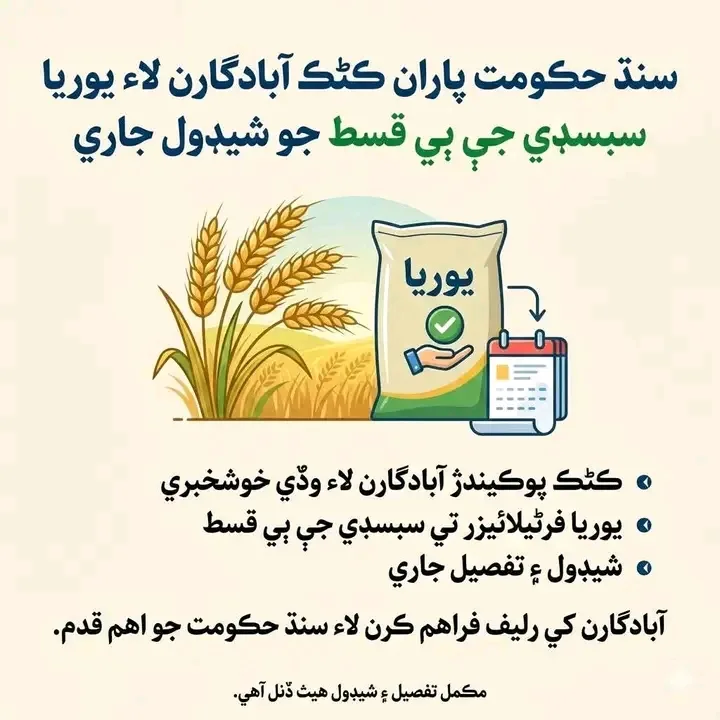
Sindh Urea Subsidy 2026: Rs12 Billion Fertilizer Payments to Start February 2
The agricultural landscape of Sindh is set for a significant financial injection as the provincial government finalizes the second phase of its massive support initiative for wheat growers. In a landmark announcement on Saturday, January 31, 2026, the Sindh Minister for Agriculture, Sardar Muhammad Bux Khan Mahar, confirmed that urea subsidy payments would officially commence on February 2, 2026.
This move, part of the Sindh Wheat Growers Support Programme, aims to stabilize production costs for farmers during a critical juncture of the Rabi season. With over Rs12 billion already released to Sindh Bank, the initiative represents one of the largest direct financial interventions for the provincial farming sector in recent years.
Rs12 Billion Released for Sindh Wheat Growers Support Programme
The Sindh Agriculture Department has taken a proactive step to ensure food security by facilitating the availability of affordable fertilizers. Minister Mahar revealed that the provincial treasury has transferred upwards of Rs12 billion to Sindh Bank and other designated financial institutions. This capital is specifically earmarked to fund the second phase of the subsidy scheme, following a successful first phase that focused on DAP (Diammonium Phosphate) fertilizer.
According to the Minister, this direct financial support is being executed under the special directives of Pakistan Peoples Party (PPP) Chairperson Bilawal Bhutto Zardari. The leadership aims to protect the livelihoods of small to medium-scale growers who form the backbone of the Indus river-fed agricultural economy. By offsetting the high costs of essential inputs, the government hopes to maintain a high yield for the current wheat crop, which is vital for both provincial and national grain reserves.
Eligibility and Verification: 212,171 Farmers to Benefit
A primary concern for such large-scale subsidy programs is ensuring transparency and merit-based distribution. To address this, the Agriculture Department has finalized a rigorous verification process. A comprehensive list of 212,171 verified farmers has been handed over to Sindh Bank.
Key highlights of the disbursement process include:
Subsidy Amount: Eligible farmers will receive Rs8,000 per acre.
Payment Gateway: Funds will be disbursed primarily through Sindh Bank branches and other selected banks to ensure easy access for rural communities.
Verification Standards: Only those growers who were officially registered and verified during the department’s latest land-holding audit are included in this phase.
This targeted approach is designed to prevent the “middle-man” exploitation that has historically plagued agricultural subsidies in Pakistan. By utilizing a verified database, the Sindh government ensures that the Rs8,000 per acre reaches the actual tillers of the soil.
Fertilizer Market Trends: Urea Usage Hits 2.5 Million Tonnes
The release of the urea subsidy comes at a time when fertilizer consumption in Pakistan is showing surprising resilience. Despite the widespread narrative that recent floods decimated the agricultural sector, data from the National Fertilizer Development Centre (NFDC) suggests that farming activity remains robust.
According to market analysis by Insight Securities, urea offtakes in the fourth quarter of the 2025 calendar year rose by a staggering 26% year-on-year. Total consumption reached 2.5 million tonnes, up from 2.0 million tonnes in the same period in 2024. On a quarter-on-quarter basis, demand surged by 36%.
Analysts believe this spike was driven by the onset of the Rabi season and aggressive advance buying by dealers who took advantage of attractive year-end discounts. However, the story for DAP fertilizer is different; offtakes for DAP fell by 21% year-on-year, dropping to 543,000 tonnes. This decline underscores why the Sindh government’s Phase 1 DAP subsidy was so critical to keep phosphorus levels in the soil stable.
Policy Impact vs. Broad-Based Expansion
While the rising urea offtake figures look positive on paper, industry stakeholders warn against over-optimism. Experts suggest that the increase in fertilizer usage reflects policy support mechanisms and shifts in crop patterns rather than a broad-based expansion of cultivated land.
The high cost of production remains a barrier to meaningful improvements in farm incomes. The Sindh Urea Subsidy 2026 is specifically designed to bridge this gap. By providing Rs8,000 per acre, the government is essentially lowering the entry cost for high-yield farming. Without such interventions, many small-scale farmers in Sindh would be forced to under-fertilize their crops, leading to a significant drop in the national wheat output.
Rabi Season and the Future of Food Security in Sindh
As the Rabi season progresses, the timing of these payments is essential. February is a peak period for wheat crop maintenance in Sindh. The availability of liquidity through the Sindh Bank fertilizer payment system will allow farmers to purchase the final rounds of urea needed for a healthy harvest.
The provincial government’s commitment to the Sindh Wheat Growers Support Programme serves as a buffer against global inflationary pressures. By focusing on “verified wheat farmers,” the department is not only supporting individual families but also securing the province’s status as a leading wheat producer.
As payments begin this Monday, February 2, the Agriculture Department has urged farmers to visit their designated bank branches with their original CNICs and verification documents to claim their due share. This initiative stands as a testament to the Sindh government’s “Farmer-First” policy, aiming for a greener and more prosperous 2026.