Sindh Ramzan Relief Package 2026: 101,939 Beneficiaries Confirmed—Full List and 8171 Check Guide
As the holy month of Ramadan approaches, the Government of Sindh has finalized the data for its massive Ramzan Relief Package 2026. According to the latest official spreadsheet data, a total of 101,939 beneficiaries have been identified across the province to receive essential financial and food assistance.
This initiative is part of a broader federal and provincial strategy to mitigate the impact of inflation on the most vulnerable households. In this article, we break down the district-wise beneficiary counts, explain why some areas have higher numbers, and provide a step-by-step guide on how you can check your eligibility using the 8171 system.
The Big Picture: Sindh’s 101,939 Beneficiary Milestone
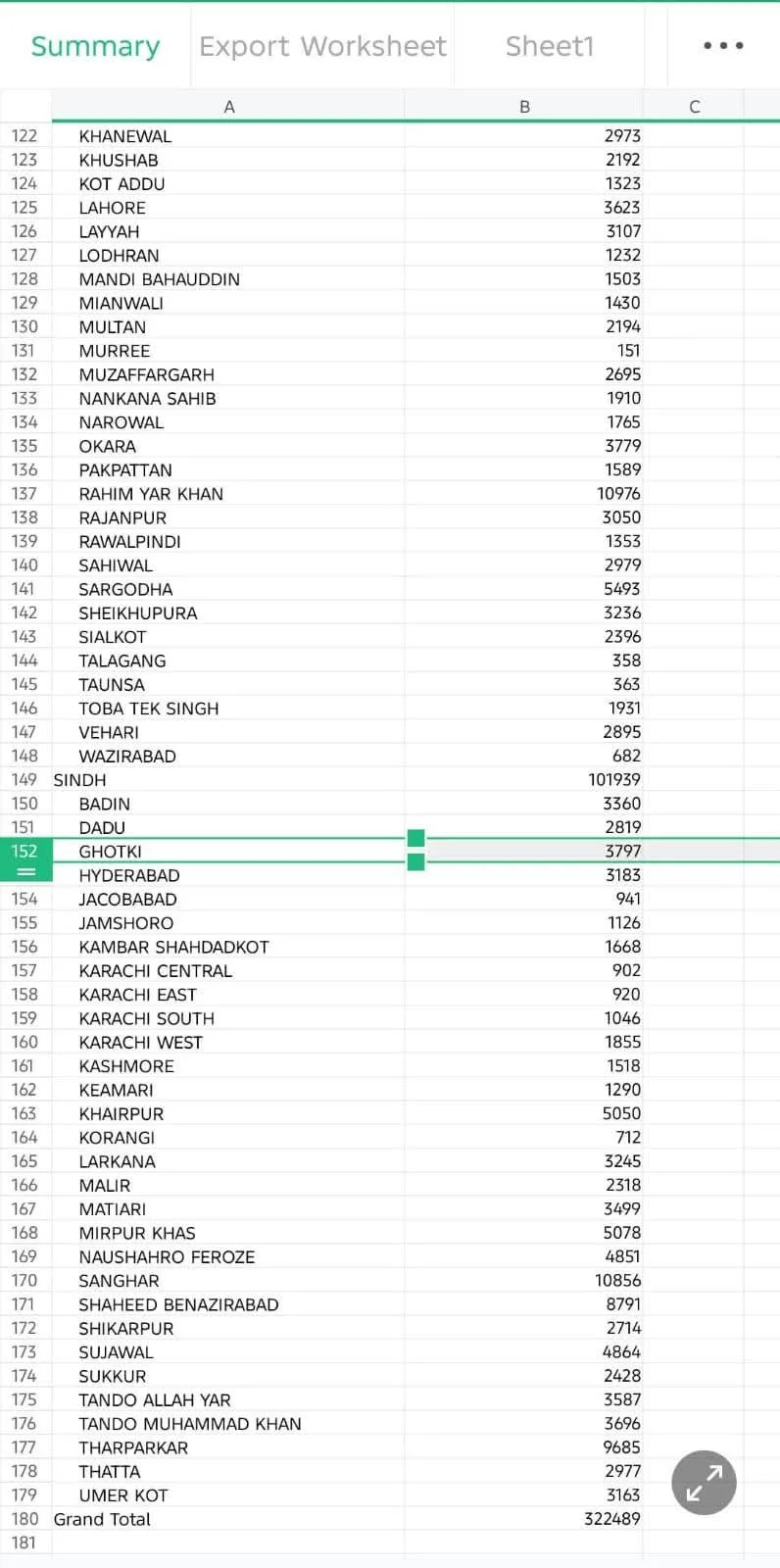
According to the “Export Worksheet” data for 2026, the Sindh province has been allocated a significant portion of the total relief fund. While the grand total for the entire documented region (including parts of Punjab) stands at 322,489, the province of Sindh accounts for 101,939 of these households.
This data is crucial for transparency, ensuring that relief reaches the remote corners of the province, from the desert of Tharparkar to the urban hubs of Karachi.
District-Wise Breakdown: Who is Getting the Most Relief?
The spreadsheet reveals that the distribution of aid is based on poverty density and the National Socio-Economic Registry (NSER) surveys. Here are the top-performing districts in Sindh with the highest number of beneficiaries:
1. Sanghar: The Leading District
With 10,856 beneficiaries, Sanghar has the highest concentration of aid recipients in the province. This reflects a major effort to support the agricultural and rural communities in this region.
2. Tharparkar: A Vital Lifeline
The drought-prone region of Tharparkar sees 9,685 beneficiaries. This relief is essential for the desert communities where food security is often a challenge during the summer months and Ramadan.
3. Shaheed Benazirabad (SBA)
Recording 8,791 beneficiaries, SBA remains a focal point for the Sindh government’s social safety net programs.
4. Other Key Districts
Mirpur Khas: 5,078 beneficiaries
Khairpur: 5,050 beneficiaries
Sujawal: 4,864 beneficiaries
Naushahro Feroze: 4,851 beneficiaries
Urban Centers: Karachi Division
Interestingly, the urban districts of Karachi show lower numbers of “documented beneficiaries” in this specific list compared to rural areas. For instance:
Karachi West: 1,855
Keamari: 1,290
Karachi South: 1,046
Karachi Central: 902
This suggests that the 2026 Ramzan Relief Package is heavily weighted toward rural and underprivileged districts where the cost of transporting food and basic necessities is higher.
How to Check Your Status: 8171 Online Check 2026
If you live in one of the districts mentioned above and want to know if your family is among the 101,939 beneficiaries, you don’t need to visit a government office. You can check your status digitally.
Method 1: 8171 SMS Service
Open the SMS app on your phone.
Type your 13-digit CNIC number (without any dashes).
Send the message to 8171.
You will receive a reply within minutes stating your eligibility for the Ramzan Relief and BISP Kafalat.
Method 2: 8171 Web Portal
Visit the official portal at 8171.pass.gov.pk.
Enter your CNIC number.
Fill in the verification code (captcha) displayed on the screen.
Click “Check Eligibility.” Your current status and any pending payments will be displayed immediately.
Why is This Relief Package Different in 2026?
Unlike previous years where families had to stand in long queues at utility stores for “Rashan Bags,” the 2026 Ramzan Relief Package focuses on Direct Cash Transfers (DCT) and targeted subsidies.
Financial Freedom: By receiving cash (often Rs. 13,000 for eligible families), beneficiaries can choose what they need most—whether it is flour, medicine, or clothes for Eid.
Transparency: Every single beneficiary, like the 3,499 in Matiari or the 2,977 in Thatta, is tracked through biometric verification at the time of payment withdrawal.
Inflation Buffer: The subsidy is specifically designed to offset the rising prices of ghee, sugar, and pulses during the high-demand month of Ramadan.
What to Do if Your Name is Not on the List?
If you are a resident of Sindh and believe you deserve this relief but are not part of the current 101,939 count, follow these steps:
Update Your NSER Survey: Visit the nearest BISP Tehsil Office and ask for a dynamic registry update. This will recalculate your PMT (Proxy Means Test) score.
Verify Your Domicile: Ensure your CNIC and Domicile are updated. Many relief programs prioritize residents with a permanent address in the district they are applying from.
Check Your PMT Score: Generally, families with a poverty score below 32 are prioritized for the Ramzan Package.
Conclusion: A Significant Step for Sindh’s Welfare
The confirmation of 101,939 beneficiaries for Sindh is a testament to the ongoing data-driven approach to social welfare in Pakistan. From the high counts in Sanghar and Tharparkar to the targeted aid in SBA and Sukkur, the 2026 Ramzan Relief Package aims to ensure that no household goes without a proper Sehri or Iftar.
As we move closer to the holy month, beneficiaries are encouraged to verify their status early via 8171 and report any irregularities or “commission-taking” by agents to the BISP helpline at 0800-26477.
Frequently Asked Questions (FAQs)
Q: Is the 101,939 count only for Sindh?
A: Yes, the specific section of the spreadsheet totaling 101,939 refers only to the districts within the Sindh province.
Q: When will the payments start for the Ramzan Relief 2026?
A: Payments typically begin 10 to 15 days before the start of Ramadan to allow families to stock up on essentials.
Q: Can I get relief if I am not a regular BISP cardholder?
A: Yes, some “one-time” relief packages are offered to families with slightly higher PMT scores (up to 40) specifically for the month of Ramadan. Check your CNIC on 8171 for confirmation.