Sindh Govt Provides Fuel Subsidy to 331,000 Farmers via Hari Card – Rs 3 Billion Distributed
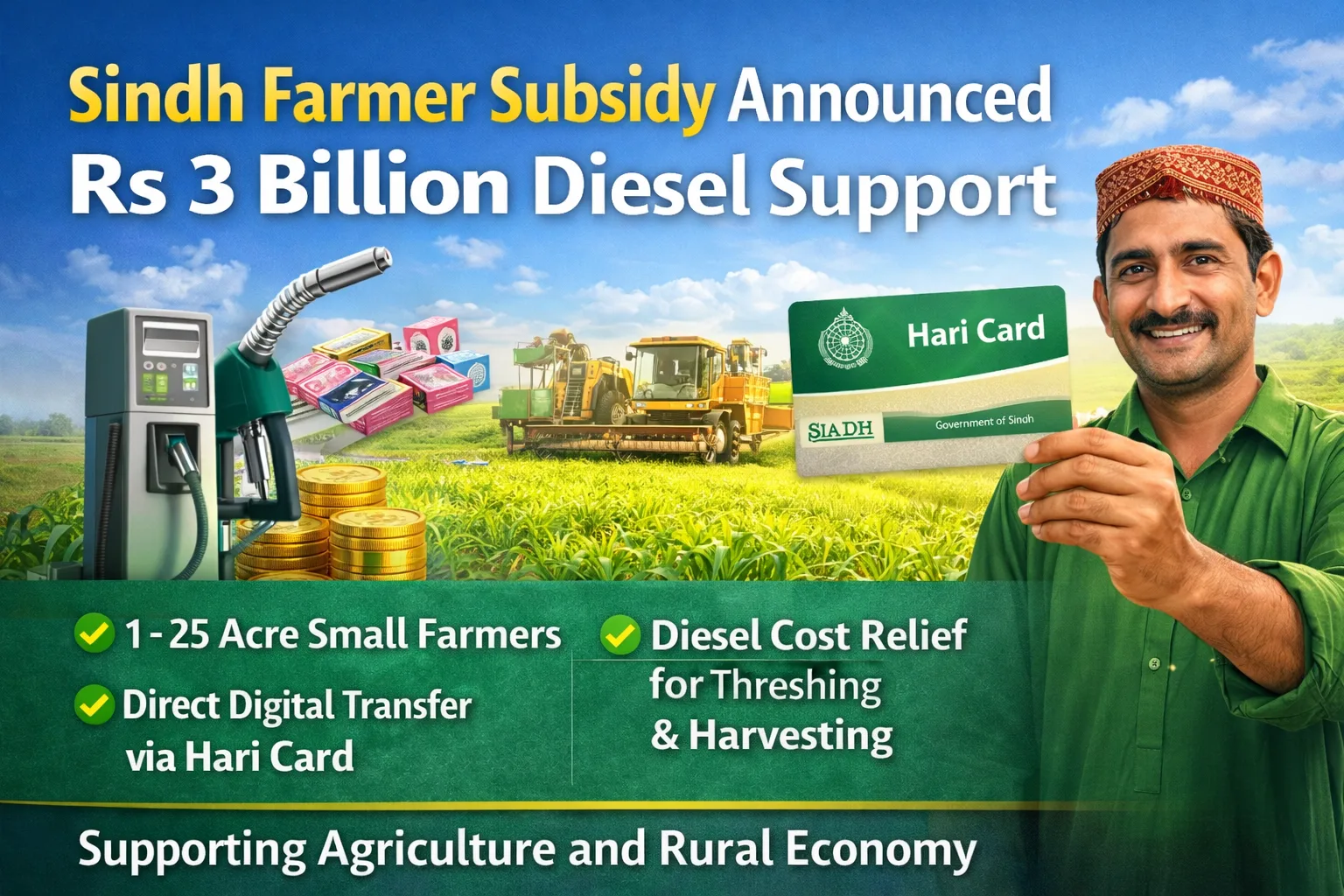
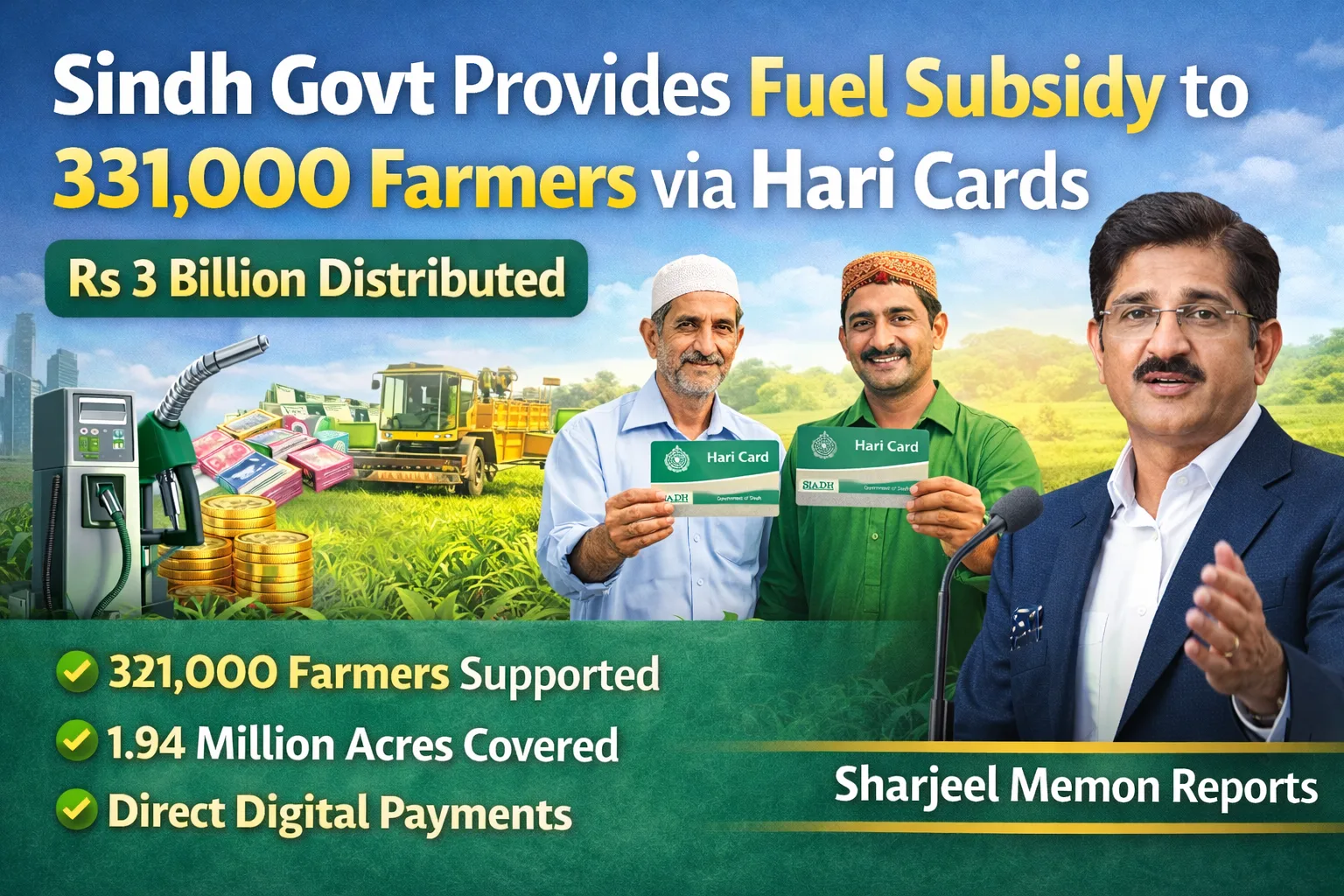
Sindh Govt Provides Fuel Subsidy to 331,000 Farmers via Hari Card – Rs 3 Billion Distributed In a major step to support the agricultural sector, the Sindh government has successfully distributed fuel subsidies to over 331,000 farmers across the province through the Hari Card system. The initiative aims to reduce production costs and strengthen the rural economy amid rising fuel prices.
Senior Minister Sharjeel Inam Memon confirmed that the government has disbursed a total of Rs 3 billion in a transparent and efficient manner.
🌾 Major Milestone in Farmer Support
According to Sharjeel Inam Memon, this initiative marks a significant milestone in the Sindh government’s efforts to:
- Provide direct financial relief to farmers
- Reduce the burden of rising diesel costs
- Improve agricultural productivity
- Strengthen rural livelihoods
The subsidy has covered approximately 1.94 million acres of agricultural land, benefiting small and medium-scale farmers.
💳 Hari Card System Ensures Transparency
The subsidy was distributed through the digital Hari Card system, which ensures:
- Direct transfer of funds to farmers
- No involvement of middlemen
- Data-based verification
- Transparent and corruption-free payments
This modern system reflects the government’s shift toward targeted and digitized subsidy distribution.
👨🌾 Who Benefited from the Subsidy?
The program mainly targeted:
- Small farmers
- Landholders with limited acreage
- Registered agricultural workers
By focusing on verified data, the government ensured that only deserving farmers received financial assistance.
⛽ Purpose of Fuel Subsidy
The main objective of this subsidy is to:
- Offset rising diesel costs
- Support harvesting and threshing operations
- Reduce production expenses
- Increase farmer income
With fuel being a major cost in agriculture, this subsidy provides much-needed relief during peak farming seasons.
📊 Rs 3 Billion Distributed Across Sindh
The government allocated and distributed:
- Total Amount: Rs 3 billion
- Beneficiaries: 331,000 farmers
- Land Coverage: 1.94 million acres
All funds were transferred directly into farmers’ accounts via Hari Cards, ensuring speed and transparency.
🌱 Positive Impact on Agriculture
The Sindh government’s farmer-friendly policies are already showing strong results.
According to officials:
- Wheat production increased significantly
- Farmers gained better financial stability
- Agricultural output improved
🌾 Wheat Production Increased Significantly
One of the biggest successes highlighted by Sharjeel Inam Memon is the rise in wheat production:
- 📈 Previous production: 3.5 million metric tons
- 📈 Current production: 4.8 million metric tons
This increase is largely attributed to:
- Subsidized fertilizer distribution
- Financial support through Hari Card
- Government-backed farming initiatives
📈 How Subsidies Help Farmers
Fuel subsidies play a crucial role in:
✔ Reducing Costs
Lower diesel expenses for machinery like:
- Tractors
- Harvesters
- Threshers
✔ Increasing Profit Margins
Farmers retain more income after harvest.
✔ Improving Productivity
Access to affordable fuel ensures timely farming operations.
🔄 Shift Toward Targeted Subsidy Model
The Sindh government is moving away from general subsidies and focusing on:
- Targeted financial assistance
- Direct benefit transfer (DBT)
- Data-driven decision-making
This approach ensures:
- Better efficiency
- Reduced wastage
- Maximum impact
📢 Government’s Future Plans
The Sindh government plans to continue:
- Expanding farmer subsidy programs
- Improving agricultural infrastructure
- Supporting small growers
- Promoting economic development
According to officials, more initiatives will be introduced to ensure:
- Food security
- Farmer prosperity
- Sustainable agriculture
🌍 Impact on Rural Economy
This subsidy program is expected to:
- Boost rural income
- Increase agricultural output
- Stabilize food supply
- Create economic growth in farming communities
⚠️ Challenges Still Faced by Farmers
Despite the subsidy, farmers still face:
- Rising input costs
- Climate challenges
- Water shortages
- Market fluctuations
However, government support is helping reduce these pressures.
🔐 Transparency & Digital Governance
The success of this program highlights the importance of:
- Digital payment systems
- Verified data usage
- Direct transfers
The Hari Card system is a major step toward modern governance in agriculture.
📌 Key Highlights Summary
- ✅ 331,000 farmers benefited
- ✅ Rs 3 billion distributed
- ✅ 1.94 million acres covered
- ✅ Transparent digital payments via Hari Card
- ✅ Wheat production increased to 4.8 million metric tons
🔚 Final Words
The Sindh government’s fuel subsidy initiative is a game-changer for the agricultural sector. By providing Rs 3 billion in direct support to over 331,000 farmers, the government has taken a strong step toward:
- Reducing farming costs
- Increasing productivity
- Strengthening the rural economy
With continued support and digital innovation, such programs can play a vital role in ensuring long-term agricultural growth and farmer prosperity in Sindh.