The Ultimate Guide to the Electric Rickshaw Scheme in Pakistan 2026: PAVE & Sindh Government Initiative
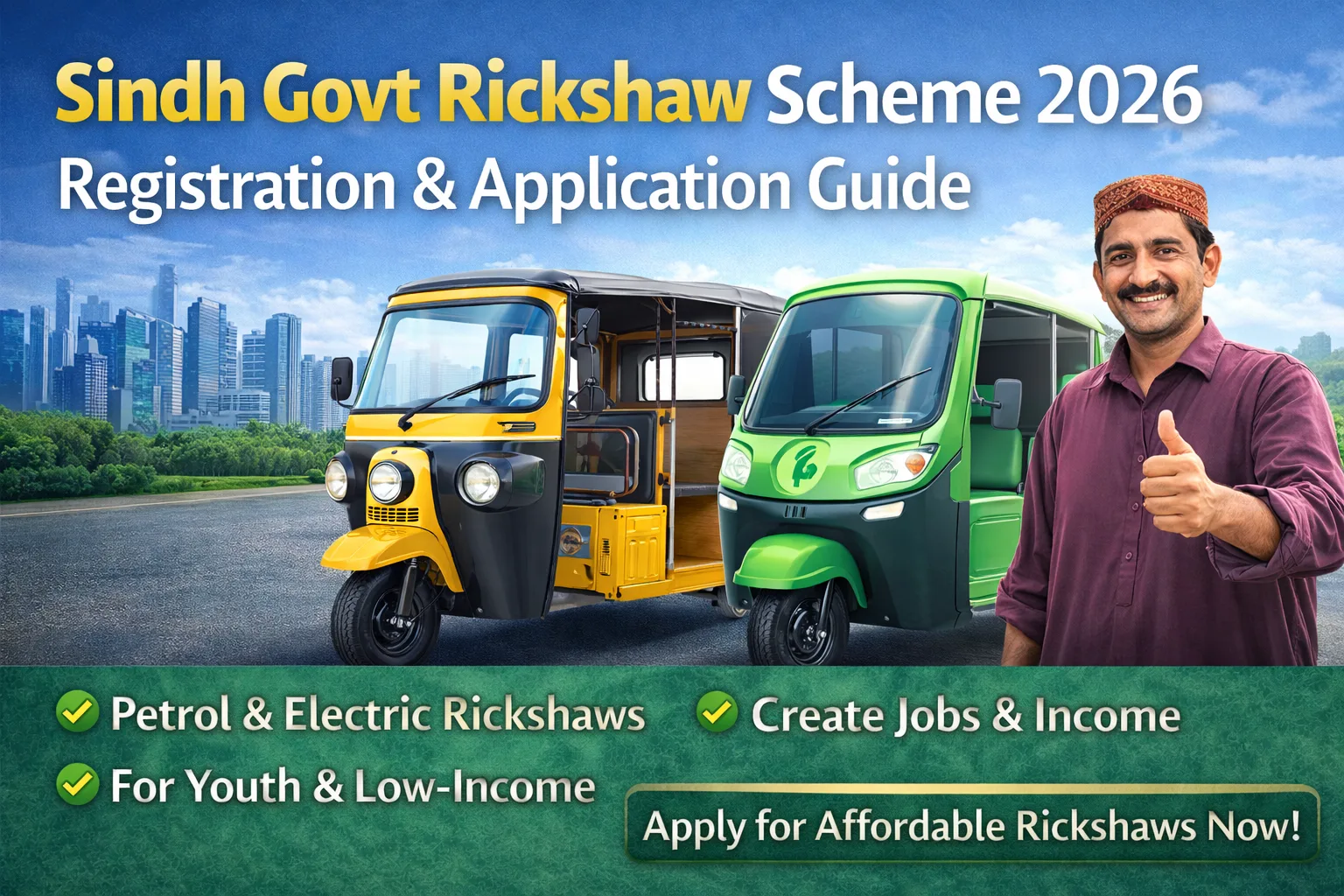
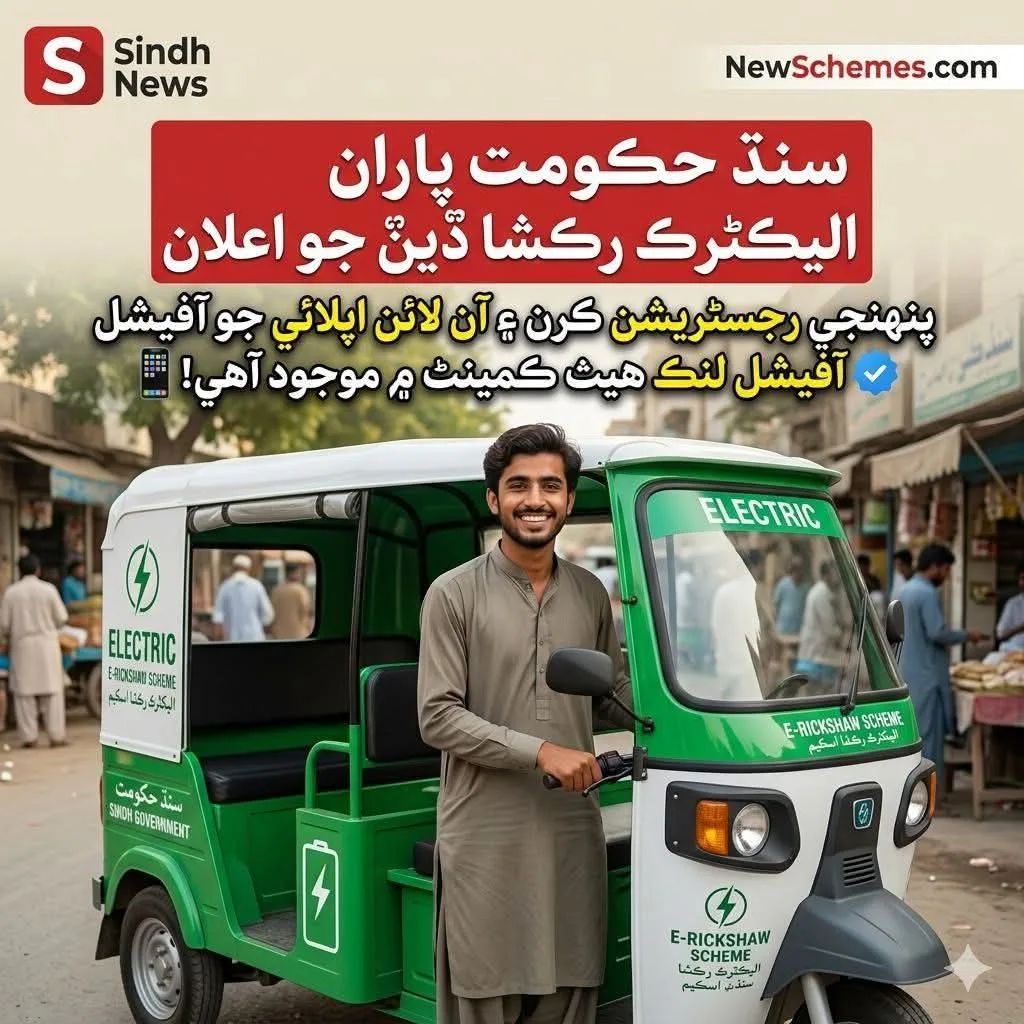
In an era where petrol and CNG prices are reaching record highs, the traditional transport sector in Pakistan is facing an existential crisis. To combat this, a revolutionary shift is taking place. The Electric Rickshaw Scheme 2026, a joint venture between the Pakistan Association of Automotive Parts & Accessories Manufacturers (PAAPAM) under the PAVE initiative and the Government of Sindh, is set to transform the streets of Pakistan.
This comprehensive guide explores everything from the application process and eligibility criteria to the economic benefits of switching from internal combustion engines to green, electric mobility.
1. Introduction: The Green Revolution in Pakistan’s Transport
For decades, the rickshaw has been the backbone of urban mobility in cities like Karachi, Hyderabad, and Sukkur. However, rising fuel costs and environmental degradation have made traditional rickshaws unsustainable. The 2026 Electric Rickshaw Scheme isn’t just a subsidy program; it is a strategic move to align Pakistan with global Electric Vehicle (EV) trends.
By replacing noise-polluting and smoke-emitting engines with silent, battery-operated motors, the Sindh government is aiming for a “Green Sindh” while providing a massive boost to the local automotive parts manufacturing industry through the PAVE (Pakistan Automated Vehicle Expansion) initiative.
2. What is the PAVE Initiative?
The Pakistan Association of Automotive Parts & Accessories Manufacturers (PAAPAM) launched the PAVE initiative to localize the production of electric vehicles.
Localization: Instead of importing expensive E-rickshaws, PAVE ensures that a significant percentage of parts are made in Pakistan.
Cost Reduction: Local manufacturing reduces the final price for the consumer.
Job Creation: The initiative supports thousands of jobs in the engineering and assembly sectors.
3. Economic Impact: Petrol vs. Electric Rickshaws
One of the primary reasons for this scheme’s popularity is the sheer difference in operational costs. Let’s look at a daily comparison for a typical driver in Karachi:
| Feature | Petrol/CNG Rickshaw | Electric Rickshaw (2026 Model) |
| Daily Fuel/Charging Cost | PKR 1,500 – 2,200 | PKR 250 – 400 |
| Maintenance | Frequent oil changes, tuning | Minimal (No engine, no oil) |
| Noise & Vibration | High (leads to fatigue) | Zero (comfortable for driver) |
| Monthly Savings | Lower profit margins | Save PKR 35,000+ per month |
For a low-income family, an additional 35,000 to 40,000 rupees in savings per month is a life-changing amount, allowing for better education and healthcare.
4. Key Features of the Electric Rickshaw Scheme 2026
The Sindh Government, in collaboration with partnered banks and PAVE, has designed the scheme with the following features:
A. Heavy Subsidies
The Government of Sindh is providing a direct subsidy on the purchase price. This means if an E-rickshaw costs PKR 600,000, the government might cover up to 20-30% of the cost for eligible applicants.
B. Interest-Free Loans
Through the Sindh Bank and other microfinance institutions, drivers can acquire these vehicles through interest-free or very low-markup loans. The “Pay-as-you-earn” model allows drivers to pay small daily or weekly installments.
C. Advanced Battery Technology
The 2026 models feature Lithium-Ion (Li-ion) batteries rather than older Lead-Acid variants. This ensures:
Faster Charging: 0 to 80% in under 3 hours.
Longer Range: 120km to 150km on a single charge.
Durability: Batteries that last 3 to 5 years before needing replacement.
5. Detailed Eligibility Criteria
Who can apply for the Electric Rickshaw Scheme 2026? The program is designed for the underprivileged and the youth.
Nationality: Must be a Pakistani citizen with a valid CNIC.
Residency: Preference is given to residents of Sindh (Karachi, Hyderabad, Larkana, Sukkur, etc.).
Age Limit: 18 to 45 years.
License Requirement: Must possess a valid rickshaw/motorcycle driving license. (The government is also setting up “fast-track” licensing desks for new applicants).
Income Status: Applicants must belong to low or middle-income groups. Individuals already registered under BISP (Benazir Income Support Programme) are highly encouraged to apply.
6. Document Checklist for Registration
To ensure a smooth application process, keep the following documents ready:
CNIC: Original and 3 attested photocopies.
Driving License: Valid learner or permanent license.
Domicile: Sindh Domicile and PRC.
Photographs: 4 recent passport-size photos with a blue background.
Affidavit: A signed statement that the applicant does not own a car or another commercial vehicle.
Utility Bill: Copy of a recent electricity or gas bill to verify the home address.
7. Step-by-Step Registration Guide
The registration for 2026 is expected to be 90% digital to ensure transparency and prevent corruption.
Step 1: Online Application
Visit the official Sindh Transport Department portal or the PAVE registration website. Fill in your personal and vehicle preference details.
Step 2: Biometric Verification
Once your initial data is accepted, visit the nearest NADRA E-Sahulat or designated bank branch for biometric verification.
Step 3: Document Submission & Interview
Shortlisted candidates may be called for a brief verification interview at the regional Transport Office to confirm their driving skills and eligibility.
Step 4: Down Payment
After approval, pay the subsidized down payment (which is kept at a minimum, roughly PKR 25,000 to 50,000).
Step 5: Balloting (If Required)
If the number of applicants exceeds the available units, the Government of Sindh will hold a transparent electronic balloting.
Step 6: Delivery and Training
Successful candidates will receive their E-rickshaws. Crucially, the scheme includes a 1-day training session on battery maintenance and charging safety.
8. Environmental Benefits: A Greener Pakistan
The environmental impact of this scheme cannot be overstated.
Smog Reduction: Karachi is often ranked among the world’s most polluted cities. E-rickshaws produce zero tailpipe emissions, helping to clear the city’s air.
Noise Pollution: Traditional rickshaws produce over 80-90 decibels of sound. E-rickshaws are virtually silent, leading to a calmer urban environment.
Carbon Credits: By adopting EVs, Pakistan can claim international carbon credits, which can be reinvested into more green projects.
9. Challenges & The Government’s Strategy
While the scheme is visionary, several hurdles exist:
A. Charging Infrastructure
The Problem: Where will drivers charge their rickshaws?
The Solution: The Government of Sindh is partnering with private companies to set up “Solar-Powered Charging Hubs” at major rickshaw stands and bus terminals.
B. Battery Life Concerns
The Problem: Batteries are expensive to replace.
The Solution: The scheme includes a 2-year battery warranty. Furthermore, a “Battery Swapping” model is being discussed where drivers can swap a dead battery for a full one in minutes for a small fee.
C. Load Shedding
The Problem: Power outages in rural areas.
The Solution: Promotion of off-grid solar charging stations to ensure rickshaws remain operational even during outages.
10. Frequently Asked Questions (FAQs)
Q: Can I convert my old petrol rickshaw to electric under this scheme?
A: Currently, the scheme focuses on new E-rickshaw units. However, the PAVE initiative is working on “Retrofitting Kits” that may be introduced later in 2026.
Q: What is the monthly installment amount?
A: Depending on the down payment, installments are expected to range between PKR 8,000 and 12,000 per month—significantly less than what a driver saves on fuel.
Q: Is there a quota for women drivers?
A: Yes! The Sindh Government has allocated a 10% special quota for women to promote female empowerment and safe transport for women passengers (Pink Rickshaws).
Q: How long does the battery last on a full charge?
A: The high-end Li-ion batteries provided in this scheme offer a range of 120km to 150km, which is sufficient for a full day of inner-city driving.
11. Conclusion: The Path Ahead
The Electric Rickshaw Scheme 2026 is more than just a transport project; it is a pillar of economic and environmental reform. For the thousands of hardworking rickshaw drivers in Sindh, it represents a path out of poverty and a way to earn with dignity.
By embracing the PAVE initiative, Pakistan is finally moving toward technological self-reliance in the automotive sector. As the first units roll out onto the streets of Karachi and Hyderabad, the era of the noisy, smoke-emitting rickshaw is finally coming to a close, replaced by the silent, efficient, and profitable future of electric mobility.
Keywords: Electric Rickshaw Scheme 2026 Pakistan, PAVE PAAPAM rickshaw registration, Sindh Govt E-Rickshaw loan, interest-free rickshaw scheme, Karachi Electric Rickshaw application, Petrol vs Electric rickshaw cost, EV policy Pakistan 2026.