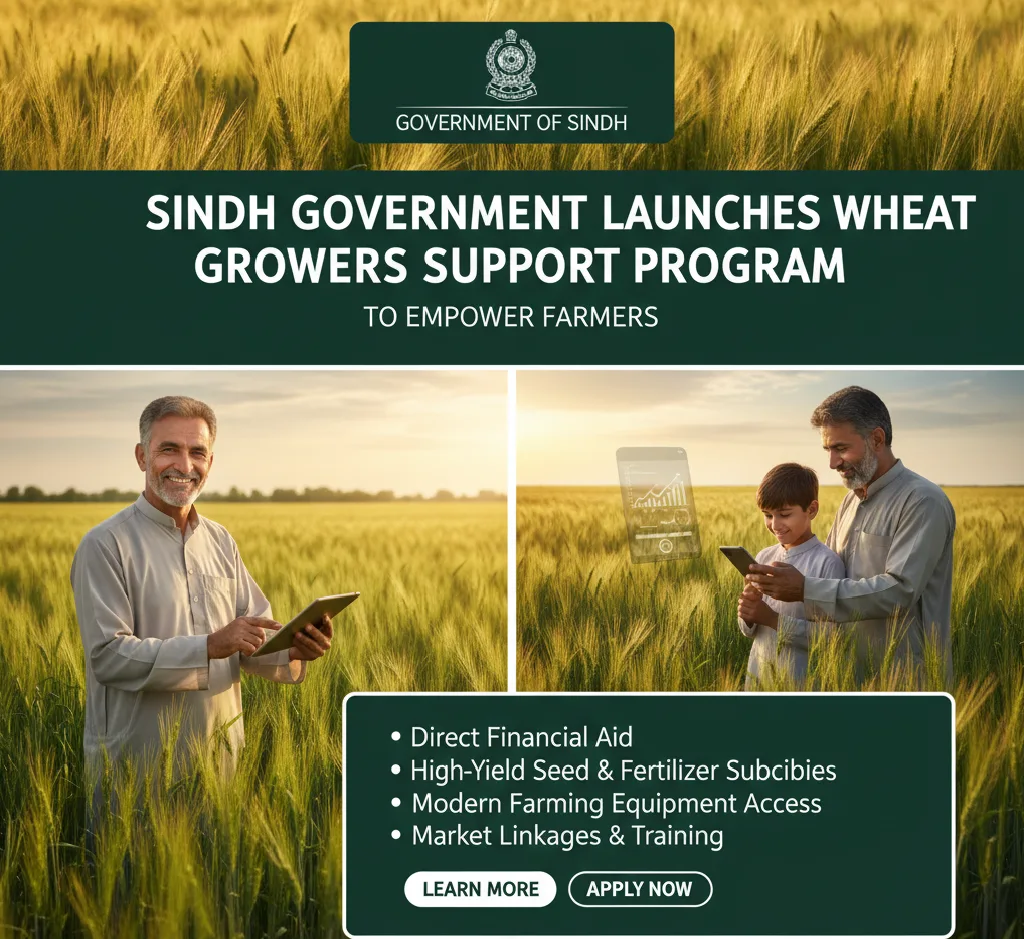
This comprehensive guideSindh Wheat Procurement Program Government of Sindh 2026 provides everything you need to know about the Sindh Wheat Procurement Program 2026. From the official support price and procurement targets to the digital registration process for Bardana (gunny bags), this article covers the vital steps taken by the Government of Sindh to ensure food security and farmer prosperity.
Wheat Procurement Program Government of Sindh (2026): A Complete Guide for Farmers
The agricultural backbone of Sindh is currently at a critical juncture. As the harvesting season for the “Rabi” crop approaches, the Government of Sindh, under the leadership of Chief Minister Syed Murad Ali Shah, has officially unveiled the Wheat Procurement Policy 2026.
In a decisive move to avoid the market instability seen in previous years, the Sindh Food Department has implemented a multi-layered strategy. This year’s program is not just about buying grain; it is about price stabilization, eliminating the “middleman” culture, and providing direct financial cushions to small-scale growers through a massive Rs. 55 billion relief package.
1. Official Wheat Support Price in Sindh 2026
Setting a fair support price is the primary tool the government uses to protect farmers from exploitation by private traders. For the 2026 season, the Sindh Cabinet has meticulously calculated the cost of production—including the rising costs of fertilizers, seeds, and diesel.
Official Support Price: The government has maintained a competitive support price (expected to be around Rs. 4,000 per 40kg, subject to final cabinet notification) to ensure that farming remains a viable profession.
Market Stabilization: By announcing this price early, the government prevents a “price crash” that often occurs when private hoarders try to buy wheat at low rates during the peak harvest.
2. Procurement Targets and Budgetary Allocation
The Government of Sindh has set an ambitious procurement target for 2026 to ensure that the province's strategic reserves are well-stocked.
Procurement Target: The Food Department aims to procure approximately 1.0 to 1.4 million metric tons of wheat.
Strategic Reserve: This stock is essential for maintaining the “Flour Subsidy” provided to urban populations and for ensuring that the province does not need to rely on expensive imports from the international market.
Fiscal Commitment: The Sindh government has allocated significant funds to ensure that payments to farmers are made via direct bank transfers within 48 to 72 hours of procurement.
3. The Digital Revolution: Bardana Issuance via Mobile App
One of the most significant changes in the Sindh Wheat Procurement Program 2026 is the complete digitalization of Bardana (gunny bags) issuance. Historically, the distribution of bags was a source of corruption and “Sifarish.”
How the “Sindh Bardana App” Works:
Registration: Farmers must register their CNIC and land holding details (Form-VII) on the official Food Department portal or mobile app.
Verification: Data is cross-verified with the Sindh Revenue Department to ensure the applicant is a genuine grower.
Quota Allocation: Small farmers (owning 1 to 25 acres) are given priority. Each farmer is assigned a quota based on their verified acreage.
Digital Voucher: Once approved, the farmer receives a digital voucher on their phone, which they can present at the nearest procurement center to collect their bags.
4. Farmer Relief: The Rs. 1,500 Per Acre Diesel Subsidy
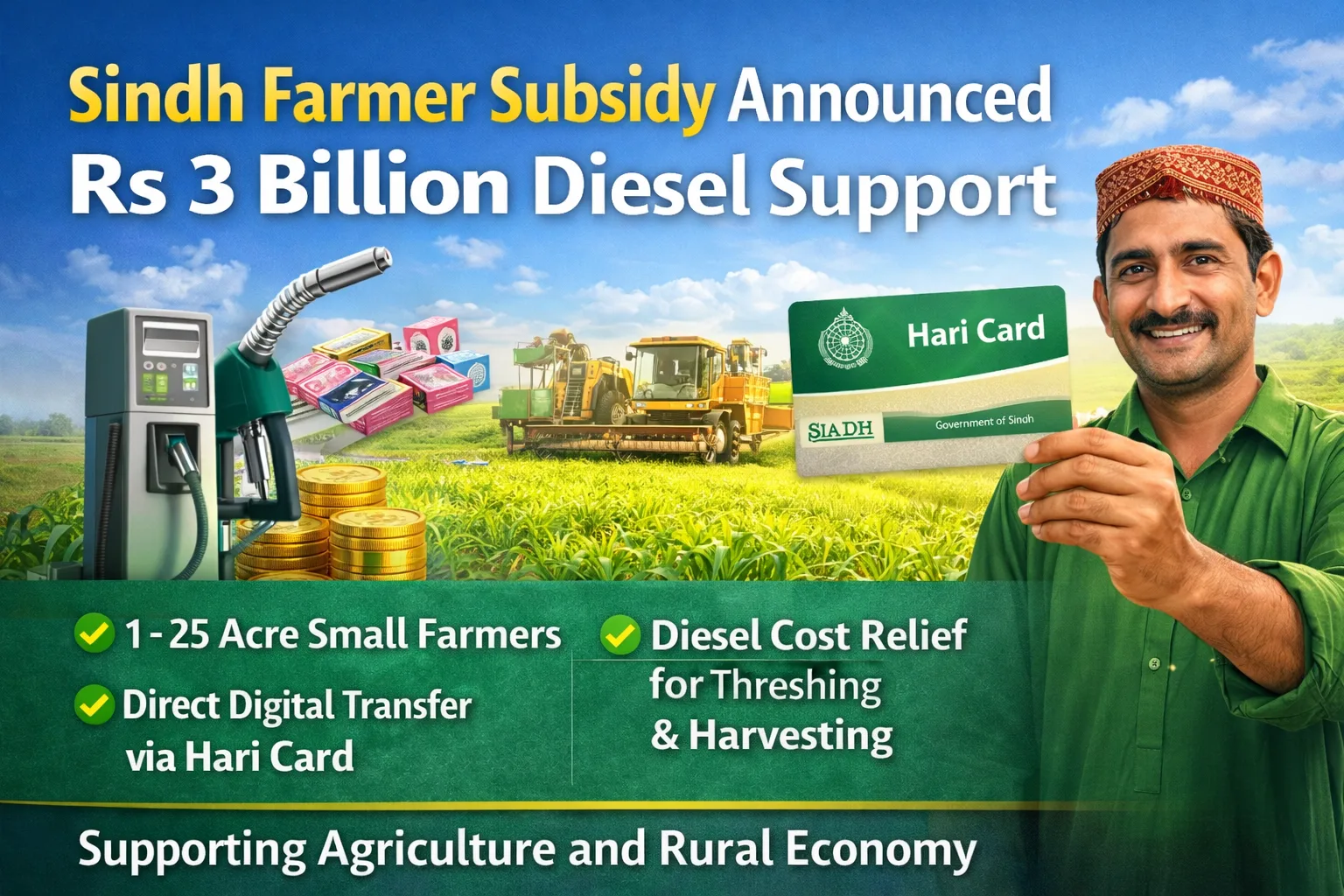
In a landmark announcement made in early April 2026, C.M. Murad Ali Shah integrated a Diesel Subsidy into the wheat procurement cycle. Recognizing that high fuel prices make “threshing” (the process of separating grain from straw) expensive, the government is providing:
Cash Support: Rs. 1,500 per acre as a one-time grant for small farmers.
Target: This benefit is specifically for the 336,000 small growers who own between 1 and 25 acres.
Total Outlay: Part of the broader Rs. 55 billion targeted subsidy package.
5. Location of Wheat Procurement Centers in Sindh
To facilitate farmers and reduce their transportation costs, the Food Department has established over 350 procurement centers across all districts of Sindh. Major hubs include:
Sukkur Division: Ghotki, Khairpur, and Sukkur.
Larkana Division: Jacobabad, Kashmore, and Shikarpur.
Hyderabad Division: Badin, Thatta, and Tando Allahyar.
Mirpurkhas Division: Umerkot and Sanghar.
Shaheed Benazirabad Division: Nawabshah and Naushahro Feroze.
Farmer Tip: Always check the “Center Mapping” on the Bardana App to find the location closest to your field.
6. Step-by-Step Guide: How to Sell Your Wheat to the Govt
For a smooth experience, farmers should follow this official protocol:
Preparation: Ensure your wheat has a moisture content of less than 10%. The government rejected several stocks last year due to high moisture levels.
Documentation: Keep your CNIC, Bank Account Number (IBAN), and Land Ownership documents ready.
Bag Collection: Visit the center on your allotted date with the digital voucher to collect Bardana.
Delivery: Deliver the filled bags back to the center.
Quality Check: A Food Inspector will verify the quality and weight.
Payment: After the “Goods Receipt Note” (GRN) is generated, the payment will be credited directly to your bank account.
7. Eliminating the Middleman (Arthi System)
The primary objective of the 2026 policy is to empower the “Abadgar” (Farmer) directly. In the past, “Arthis” or middlemen would buy wheat from poor farmers at low rates and then sell it to the government at the support price, pocketing the profit.
Strict Measures for 2026:
No Bulk Purchases: Procurement centers are strictly forbidden from purchasing from traders.
Monitoring Teams: Special surveillance teams and District Commissioners (DCs) have been tasked with monitoring centers to ensure only registered farmers are entertained.
Complaint Helpline: A dedicated 24/7 helpline has been established at the Food Directorate in Karachi to report any official asking for “commission” or bribery.
8. Impact on Food Security and Flour Prices
By procuring wheat at a fixed price, the Government of Sindh controls the supply chain of flour.
Wheat Release Policy: After procurement, the government releases this wheat to flour mills at a subsidized “Release Rate.”
Stabilizing “Atta” Prices: This ensures that the price of a 10kg or 20kg flour bag in Karachi, Hyderabad, and Sukkur remains within reach of the common man, regardless of international market fluctuations.
9. Frequently Asked Questions (FAQs)
Q1: Can I sell wheat if my land is in another province?
A: No, the Sindh Wheat Procurement Program is strictly for farmers with land located within the administrative boundaries of Sindh.
Q2: What is the maximum limit of wheat a single farmer can sell?
A: To prioritize small growers, there is usually a cap (e.g., 500 to 1000 bags) per CNIC, depending on the district's total production.
Q3: What happens if the government target is met before I sell my wheat?
A: The government often extends the target if there is a surplus. However, it is advised to register on the Bardana App as soon as it opens to secure your slot.
Q4: Is the payment made in cash or cheque?
A: For transparency, 100% of the payments are made via Online Bank Transfer to the farmer's verified account.
10. Conclusion: A Prosperous Future for Sindh’s Agriculture
The Wheat Procurement Program 2026 represents a sophisticated evolution in Sindh's agricultural governance. By merging technology with financial subsidies, the provincial government is moving toward a system where the farmer is the primary stakeholder.
The integration of the Rs. 2,000 monthly petrol subsidy for motorcyclists and the Rs. 1,500 per acre diesel relief further demonstrates the Sindh Cabinet’s holistic approach to combating inflation. For the farmers of Sindh, the message is clear: the government is ready to buy your hard work at a fair price.
SEO Pro-Tip for Farmers: Keep your mobile number active and linked to your CNIC. The Food Department sends all updates regarding bag collection dates and payment confirmations via SMS.
Stay updated with the latest Sindh Agriculture News and Food Department Results by following the official Government of Sindh Information Department portal.
Check Online Bardana Here
Keywords: Wheat Procurement Sindh 2026, Sindh Food Department, Bardana App Registration, Murad Ali Shah wheat price, Sindh support price for wheat, farmer diesel subsidy Sindh, how to get gunny bags in Sindh.