The Human Face of Bureaucracy: Unpacking Government Job Applications in Rural Sindh
In a country where public sector employment remains a cornerstone of economic stability and social mobility, the meticulous process of applying for government jobs is a critical, yet often unseen, administrative undertaking. The images provided offer a fascinating window into this world, specifically detailing the application procedures and comprehensive applicant lists for lower-grade posts (BPS-01 to BPS-04) across multiple Talukas—Shikarpur, Matiari, Hala, and Saeedabad—within rural Sindh. These documents reveal not just the mechanics of recruitment but also a demographic snapshot of those aspiring to public service.
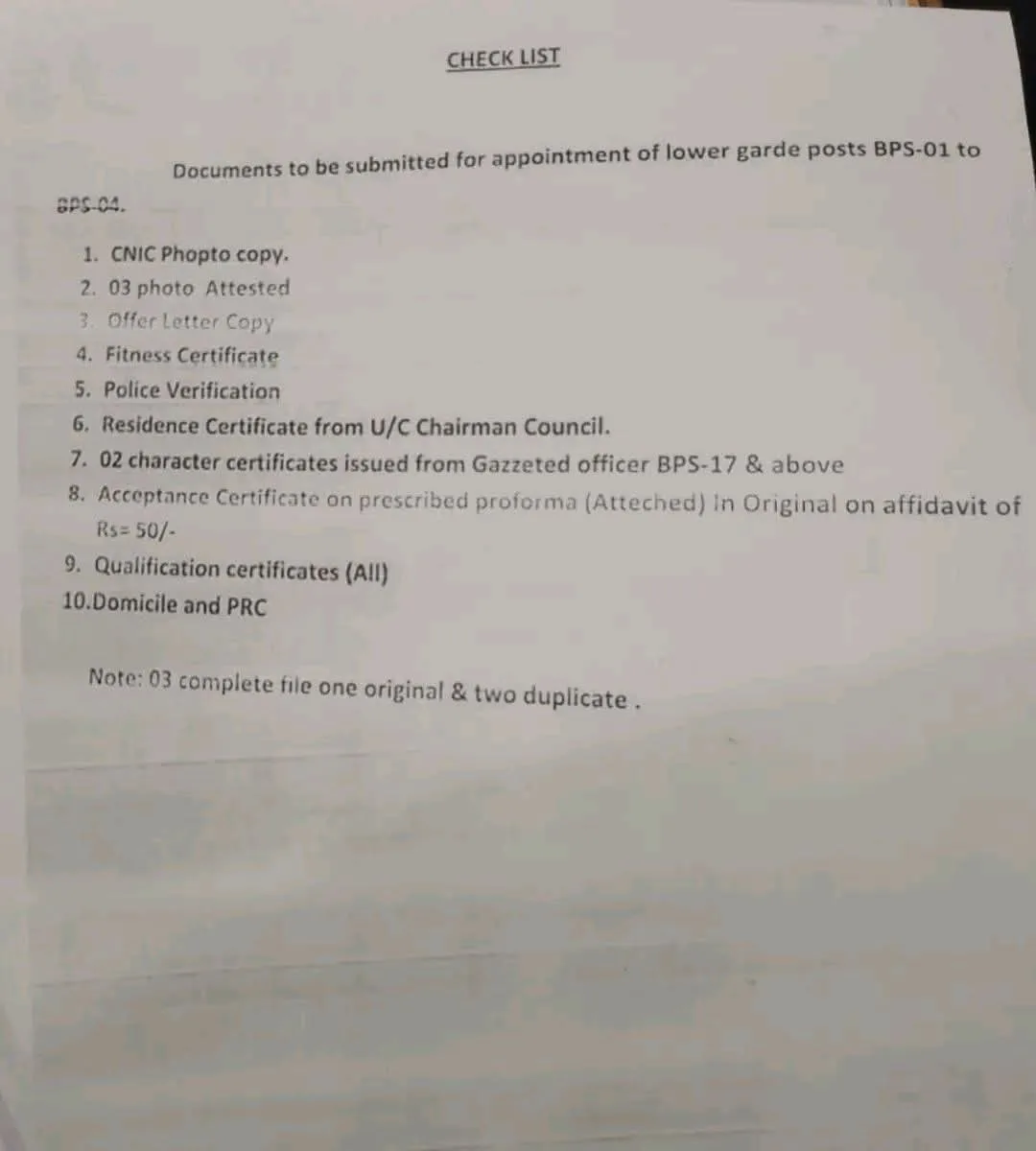
The Bedrock: A Rigorous Application Checklist
At the heart of the recruitment process lies a stringent checklist, designed to ensure that every applicant is thoroughly vetted for authenticity, eligibility, and suitability. This standardized set of requirements underscores the government's commitment to transparent and merit-based hiring. Prospective candidates are mandated to submit a comprehensive file, typically comprising one original and two duplicate sets of the following documents:
CNIC Photo Copy: Essential for identity verification.
Attested Photos: To facilitate identification and official records.
Offer Letter Copy: (If applicable) For verification of prior engagement or specific offers.
Fitness Certificate: A medical clearance crucial for physically demanding roles.
Police Verification: A mandatory background check to ensure a clean record.
Residence Certificate from U/C Chairman Council: To confirm local residency and eligibility for regional quotas.
Character Certificates: Two attestations from gazetted officers (BPS-17 & above), affirming the applicant's good conduct.
Acceptance Certificate on Prescribed Proforma: An official, attested document on a Rs. 50/- affidavit, formalizing the applicant’s intent.
Qualification Certificates (All): Proof of academic and professional credentials.
Domicile and PRC: Critical documents establishing permanent residency within the province and district.
This exhaustive protocol ensures that the foundational workforce of the public sector—including vital roles like Chowkidar (watchman), Sanitary Worker, Sweeper, and Driver—is composed of individuals who meet strict administrative and personal criteria.
A Tapestry of Aspirants: Insights from the Applicant Lists
The true depth of public service aspiration becomes evident when examining the extensive applicant lists from Shikarpur, Matiari, Hala, and Saeedabad. These tables, far from being mere data sheets, represent hundreds of individuals hoping to secure a stable future. Each entry provides a unique identifier: the applicant's name, their father's name, date of birth, and their highest declared qualification (e.g., Primary, Middle, Matriculation, Intermediate, B.A., B.Com, M.A.). Additional columns with “Yes/No” likely indicate the fulfillment of specific criteria, allowing for quick assessment of eligibility.
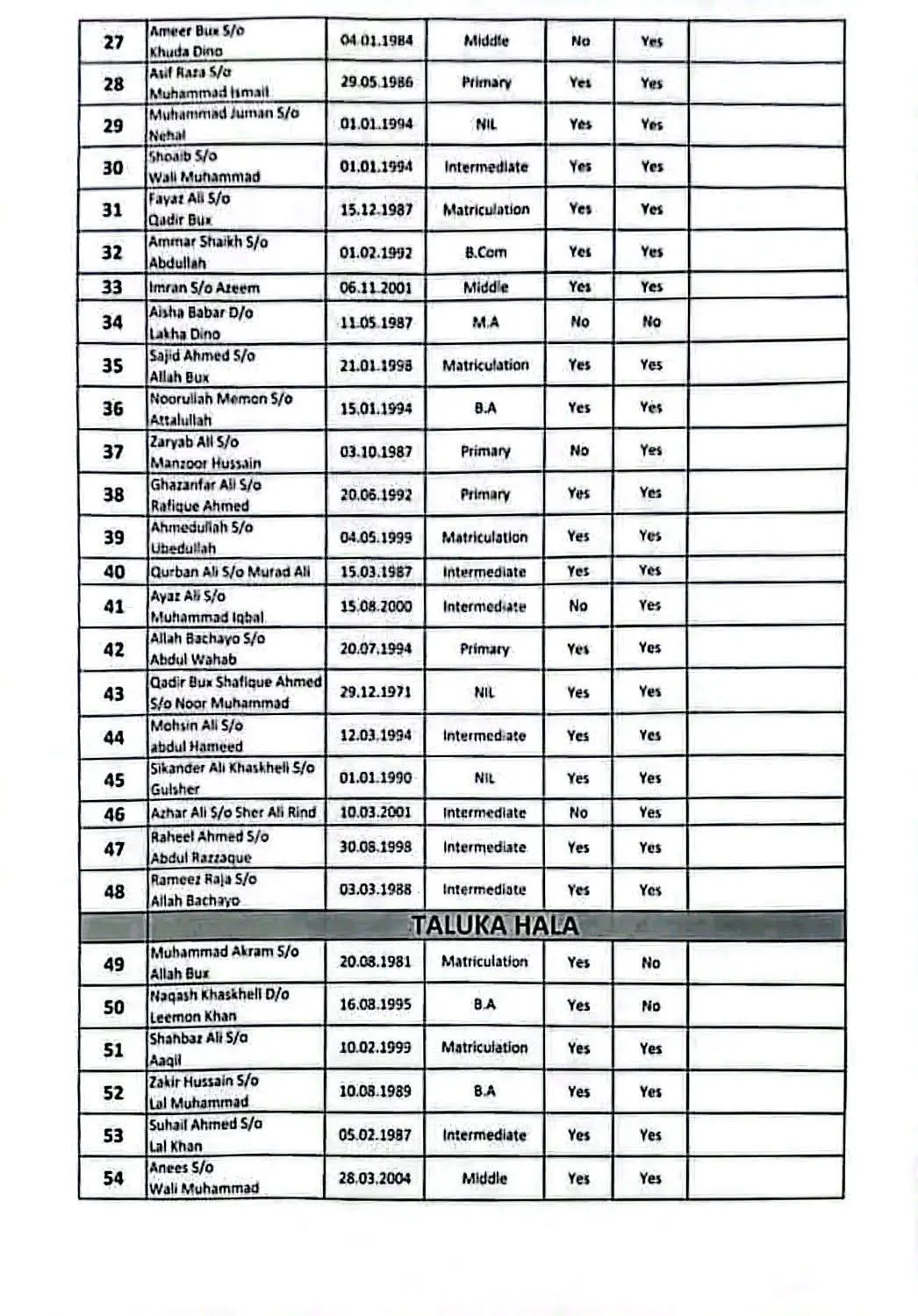
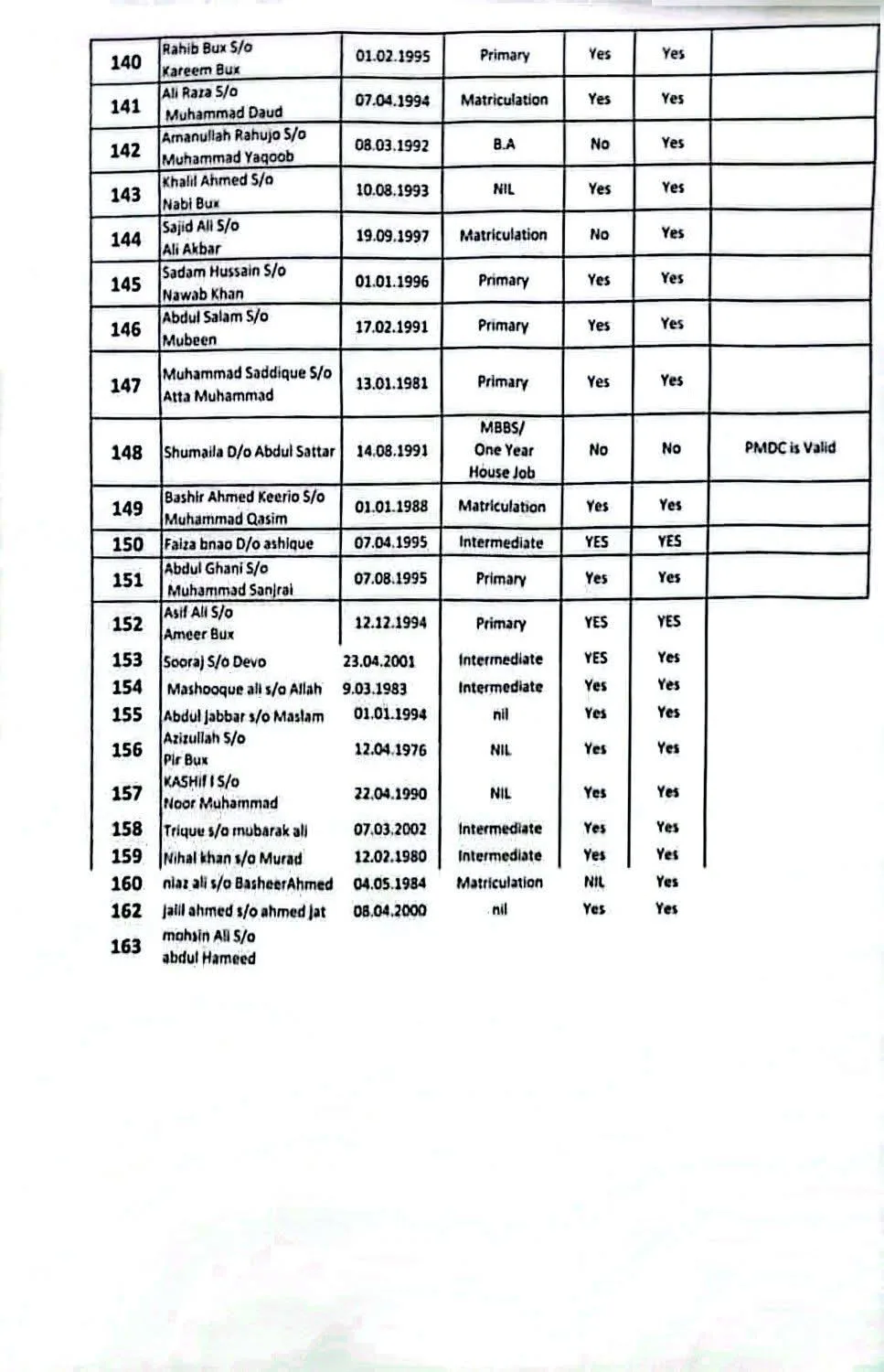
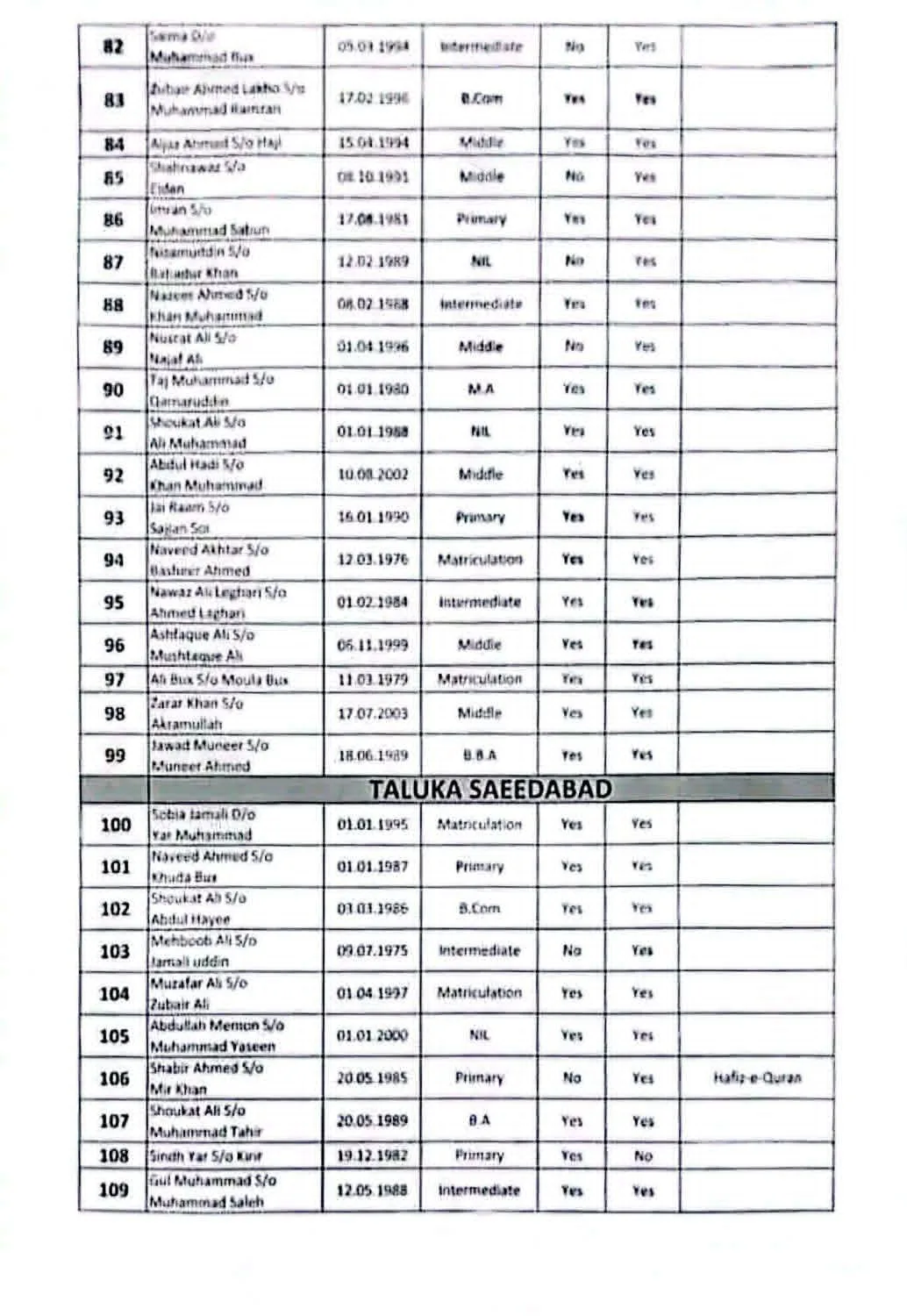
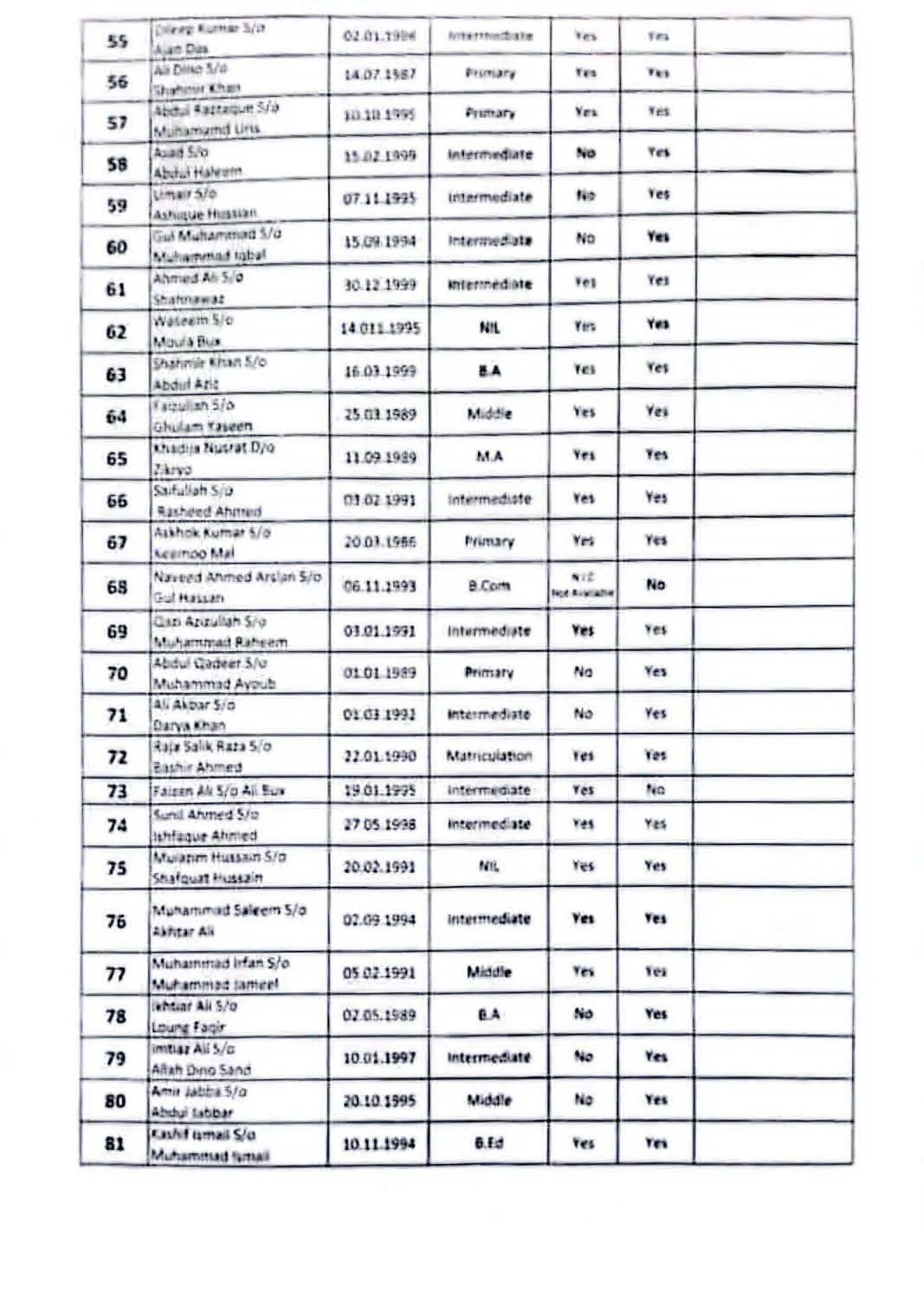
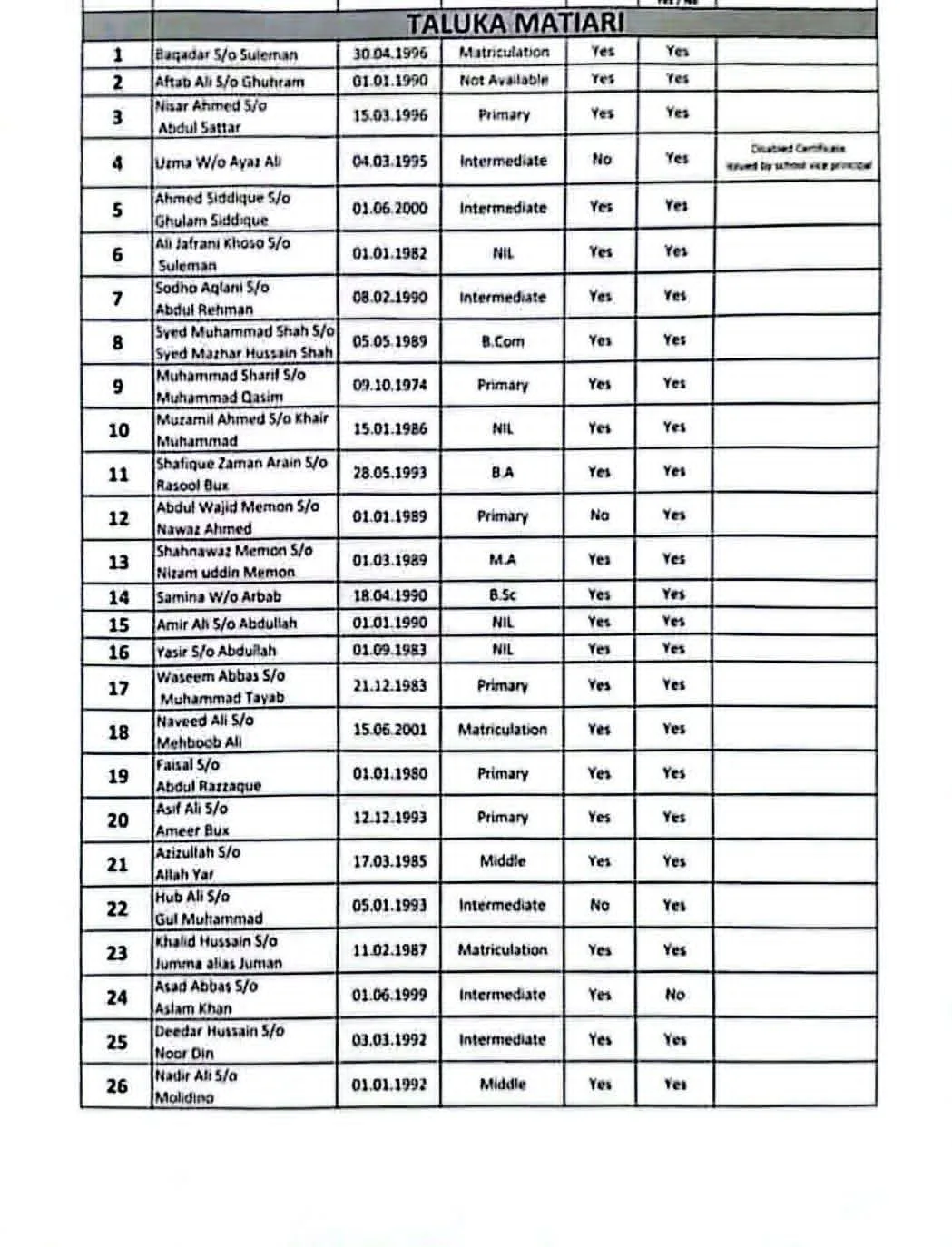
Key observations from these lists include:
Diverse Educational Backgrounds: The qualifications range widely, from primary education for some basic roles to matriculation, intermediate, and even bachelor's degrees for others. This reflects the varied skill sets required across different BPS levels.
Age Distribution: Dates of birth span several decades, indicating a mix of younger aspirants fresh out of educational institutions and more mature individuals seeking stable employment.
Geographical Representation: The division by Taluka (Matiari, Hala, Saeedabad, and the broader Shikarpur district) highlights the localized nature of recruitment, often prioritizing residents from specific administrative units.
The Unseen Narrative: Behind each name is a story of hope, effort, and the desire for a better life. The sheer volume of applications underscores the economic realities and the significant value placed on government employment in these regions.
The Administrative Effort: Beyond the Paper
Managing hundreds, if not thousands, of applications requires monumental administrative effort. From receiving and categorizing documents to conducting verification checks (police, medical, academic) and maintaining meticulous records, the process is a testament to the dedication of local government bodies. The existence of these detailed lists, with specific identification numbers and carefully recorded qualifications, speaks to a systematic approach to public sector recruitment.
In conclusion, these seemingly mundane administrative documents offer a profound insight into the mechanics of governance and the aspirations of a populace. They illustrate the structured gateways to public service, the diligence required in administrative processes, and the enduring appeal of government employment in rural Sindh. Each name on these lists represents a thread in the larger fabric of community and public administration, poised to contribute to the daily functioning of their respective Talukas.